Muslims, the Secular & Existential Risk
Such risks include pandemic diseases, the climate emergency, nuclear conflict, and threats from potentially malevolent developments in Artificial Intelligence.
Latest NewsContact UsScience does not answer all questions we have as a species.
Science does not answer all questions we have as a species.
Science does not answer all questions we have as a species.
Science does not answer all questions we have as a species.
Science does not answer all questions we have as a species.
Watch our Short Film
on existential risks, the Islamic concept of 'ilm (knowledge), and the MUSER project's objectives

Dr Caroline Tee is Lecturer in Modern Islam at the University of Glasgow. Her work focuses on the intersections between Islam, democratic politics and other major institutions of modernity such as modern science, secular education, and civic engagement. She is a specialist on modern Turkey, where she has carried out extensive ethnographic fieldwork over the course of 16 years.
Dr Tee is the author of The Gülen Movement in Turkey: The Politics of Islam and Modernity (London: IB Tauris, 2016), as well as multiple articles and chapters which address the relationship between Muslim groups and the secular state tradition in Turkey. She is lead editor of The Oxford Handbook of Religion in Turkey (Oxford/NY: Oxford University Press, 2024), and co-edits the Edinburgh Studies in the Anthropology of Islam book series at Edinburgh University Press.

Amin El Yousfi is a College Fellow at the University of Cambridge where he completed a PhD on how everyday Muslim pieties encounter and operate through processes of secularisation and neoliberlisation. His research was based on extensive ethnographic fieldwork in France and the UK looking at the intersection between Islam, neoliberalism and secularism. In addition to studying privately a traditional curriculum of Islamic sciences with ‘ulama, Amin completed an MPhil in Economics and a second MPhil in the Social Sciences.
He also co-founded the Moroccan Centre for Innovation and Social Entrepreneurship (MCISE) before joining the University of Cambridge with a full Cambridge Trust scholarship. His work has been published in various journals such as: Religion, State and Society, Religions, the Journal of Islamic Studies and Contemporary Islam. His forthcoming monograph is soon to be published with Oxford University Press.

Dr. Maan al-Dabbagh is one of the few scholars globally dedicated to advancing the understanding of the intellectual history of the Hijaz in the early modern period. With a PhD in Islamic Intellectual History from Cambridge and two Master’s degrees—one in Middle East and Islamic Studies from Exeter and another in Contemporary Islamic Studies—Dr. al-Dabbagh has a robust academic foundation. This scholarly pursuit is complemented by over 20 years of studying traditional Islamic sciences under some of the most esteemed scholars across the Islamic world.
Dr. al-Dabbagh has also taught traditional Islamic texts across various disciplines, bringing a unique blend of academic rigor and traditional knowledge to the field. Passionate about bridging traditionally-inspired insights with contemporary discourses, Dr. al-Dabbagh continues to contribute to the scholarly community through research, teaching, and publications.
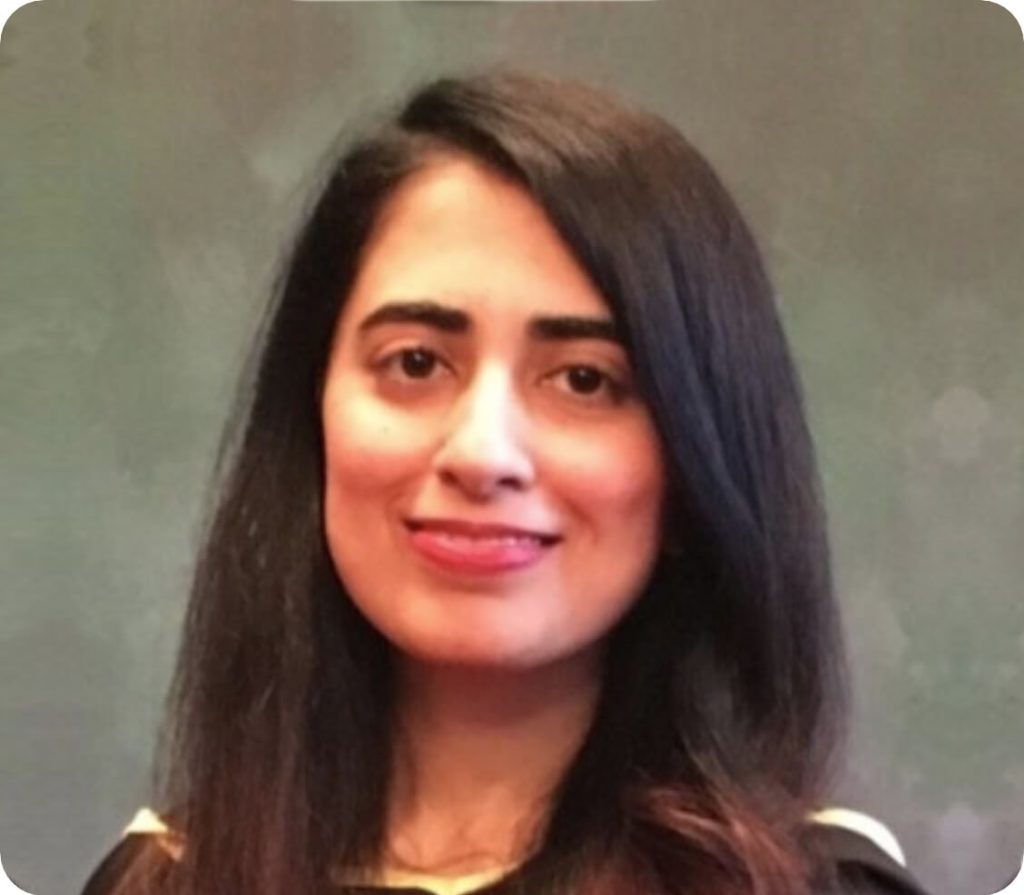
Dr Sundas Mahar is the administrator for the MUSER project, and is a researcher and educator currently based at the University of Glasgow. Her PhD "Environmental literacies for regenerative and sustainable futures: indigenous and traditional perspectives" investigated the use of indigenous, faith, spiritual, and cultural literacies for contemporary sustainability education.
She is specifically interested in using decolonial and pluriversal frameworks with ecopedagogy, deep ecology, and Islamic environmentalism to create impactful approaches to education for sustainability and regeneration. Her research focuses on using creative, participatory, and embodied approaches to inquiry with students and communities in non-formal educational contexts.

Mohammed Uzair Belgami has been seeking knowledge over several years through private study with 'ulamā from different parts of the world, particularly in the South Asian and Kurdish traditions. He has also completed undergraduate and postgraduate study in Medicine and the Social Sciences. His doctoral research project at the University of Cambridge was an ethnographic study of the constitution of 'ilm and 'ulamā.

Lili Di Puppo is a postdoctoral researcher at the Department of Social and Cultural Anthropology at KU Leuven, Belgium. She focuses on religion, the dialogue between theology and anthropology, sacred sites, the environment, and ethnicity. She has conducted fieldwork in Russia’s Volga-Ural region, Moscow, and Georgia. She was an assistant professor of sociology at the Higher School of Economics in Moscow from 2013 to 2022 and a university researcher at the Aleksanteri Institute, University of Helsinki, in 2023-2024.
She has published a special issue on Muslim ontologies, transcendence and anthropology in HAU - Journal of Ethnographic Theory and two others on Islam in Russia in Ethnicities and Contemporary Islam. She is the convenor of the European Association of Social Anthropology’s network ‘Muslim Worlds’ and co-editor of the book ‘Peripheral Methodologies: Unlearning, Not-Knowing and Ethnographic Limits’ (Routledge, 2021).

Dr Yasar Gün holds a background in Sociology, Religious Studies, History, and traditional Islamic sciences. He completed his PhD in Contemporary History within the ERC-funded project 'The European Qur’an'. His PhD explored how the Qur’an shaped encounters between Europe and the Ottoman Empire during the Enlightenment.
His earlier MA research on Islam and ecology in France reflects his interest in how Muslim thought engages with contemporary ethical and existential questions. Across his work, he combines theological and textual analysis with empirical research, drawing on fieldwork with Muslim communities in France. A central focus of his research is how Muslims interpret and live with the Qur’an in secular contexts, and how religious ideas circulate between intellectual traditions and everyday life.
Religious voices are largely absent from conversations around existential risk, despite the fact that the majority of the world’s population identify as religious and the reality that these risks, by their very nature, threaten us all.
The core hypothesis of the MUSER project is that by de-secularizing approaches to knowledge construction, and by taking seriously the Islamic concept of ilm (knowledge) with respect to risk, we will open new epistemological perspectives as well as potential responses to the existential challenges that all of humanity faces.
Latest NewsContact Us