
“A Knowledge for Uncertain Times: approaching transcendence and the human relationship with the world in Sufi communities across fieldwork sites”
Dr. Lili Di Puppo (FAU Erlangen-Nürnberg)
How do I get closer to my Sufi interlocutors’ experiences of divine presence and transcendence? How do I make present in my research this invisible dimension of reality that they encounter? What are the methodological implications of trying to approach the invisible? These questions guide my current and past field research and were the central themes of the online talk I gave for The CAT (Cambridge Anthropology Theology) Network seminar series on 28 January 2025 with the title “Knowledge through surrender: Reflecting on methodological and theoretical approaches to studying transcendence in Sufi communities”.
During my presentation, I reflected on my previous fieldwork in a Bashkir Sufi circle in Russia’s Urals region and my current fieldwork in Sufi circles in Belgium and France. In my previous research, I studied how my interlocutors experienced divine presence by connecting with the Bashkir land and environment. In my current research, I explore how francophone (Sufi) Muslims respond to the threats and challenges confronting humanity today. The common thread in my ethnographic fieldwork is the Islamic Sufi perception of the human being and of the human relationship to reality, the world and creation.
”How do I make present in my research this invisible dimension of reality that they encounter?
Although they are geographically far apart, my fieldwork locations are united by the presence of Sufi saints, awliya, and the particularities of their mode of knowing, a mode of perception that transcends boundaries, not only boundaries between places but also between life and death, this world and the next. This mode of knowing attunes to the principle of oneness, tahwid, in Islam. Vincent, one of my Belgian interlocutors, reminded me of this principle and the holistic vision that is particular to the Islamic tradition, as we were conversing about the Islamic perception of the threats and challenges to humankind in our times.[1]
Vincent pointed to what he called a “shortness of vision” in contemporary societies and the tendency of individuals within them to privilege their own immediate interests. By contrast, he noted that in ancient societies, the wisdom of elders guaranteed that humans recognized their “smallness” and their duty to live in harmony with something bigger, a bigger universe or creation. As he went on to explain, today people think of themselves in grandiose terms, having lost sight of the human being’s inherent fragility. A shortness of vision further implies that we no longer experience the universe’s harmony, the way in which catastrophes, whether personal or planetary, correspond to its larger “ascending and descending movements”, a sort of rhythm that is proper to it.
With these words, Vincent alluded to a mode of perceiving reality in which the human is, so to speak, “reduced to size”, as s/he becomes aware of creation’s immensity. This awareness implies an attitude of humility. As I attended dhikr ceremonies in Brussels week after week,
[1] Vincent is a pseudonym.
”I became aware of my own soul and heart as organs of perception and of how my interlocutors saw me as a soul in search of God.
I became aware of how the Sufi tradition brings the murid (disciple) to this position of humbleness. It was also the position that I adopted as a researcher during pilgrimages and conversations with my Bashkir interlocutors, as they made me aware of the awliya’s all-encompassing gaze and of their ability to penetrate the depths of one’s soul.
Conscious of my methods’ inadequacy to approach this invisible dimension of reality experienced by my interlocutors, I gradually realized that my position was one of “being seen” (Di Puppo 2024). Led to this position, I became aware of my own soul and heart as organs of perception and of how my interlocutors saw me as a soul in search of God. This perception resonated with the remark of a Belgian murid during a meal after a dhikr ceremony in Brussels, when he said, “All of us are souls, gathered here tonight at this table”. For my interlocutors, the connection with God means acknowledging that we are ourselves an obstacle to His presence. During a fiqr session in a zawiya in a Brussels neighbourhood, Vincent was the murid leading the session, and he made us aware of our impotence. It is by recognizing it that we let God’s might and presence manifest itself.
If we adopt the perspective of the Islamic Sufi tradition, the precarity of human existence is no longer something that needs correction. Instead, it is by embracing it that the human turns to God and recognizes His might. Human precarity thus contains the promise of a connection with the Divine. From a Sufi perspective, neither the world nor the human are self-sustaining, as they depend on God for their existence. The position of humility as an approach to knowledge in the Sufi tradition and a mode of recognizing the human place in creation contrasts with the ideals of control, predictability and human domination that have characterized the secular scientific worldview since the enlightenment.
These ideals also guide the search for solutions to mitigate the potentiality of human extinction in the field of existential risk studies. In their book Calamity theory: Three critiques of existential risk, Joshua Schuster and Derek Woods (2021, 92) comment on the work of the founder of the field, analytic philosopher Nick Bostrom. They observe his ambition to overcome through technology human existential perishability and fallibility in favor of transhuman superintelligence. This project of “de-existentializing the human” implies replacing “the precarious and disaster-prone condition of existence with a more deterministic, reliably calculated, and intelligent existence” (Schuster and Derek 2021, 92). Scholars such as Nick Bostrom thus consider the fragility of human existence to be an obstacle to the preservation of intelligence, understood here as reason.
Coming back, then, to my conversations with my Sufi interlocutors and their perception of the human being. For them it is, on the contrary, by realizing one’s very human fragility that one comes closer to God and to knowledge of the world. Acknowledging the finitude of the human being and of the material world in which we live means opening up to other dimensions of reality, other modes of knowing not centered in the rational faculties. This form of knowledge also has implications for the anthropologist and his or her positionality, since it implies that our interlocutors see us from a spiritual perspective as souls and not through the lens of socio-cultural categories. This knowledge is ultimately an invitation to the researcher to surrender to the gaze of his or her interlocutors by acknowledging the limits of viewing reality through rational thinking.
References
Di Puppo, Lili. 2024. “‘What does the heart want?’ Being seen, ‘heart ethnography,’ and knowledge through surrender in a Bashkir Sufi circle in Russia”. HAU: Journal of Ethnographic Theory 14 (1): 61–73.
Schuster, Joshua, & Woods, Derek. 2021. Calamity Theory: Three Critiques of Existential Risk. University of Minnesota Press.
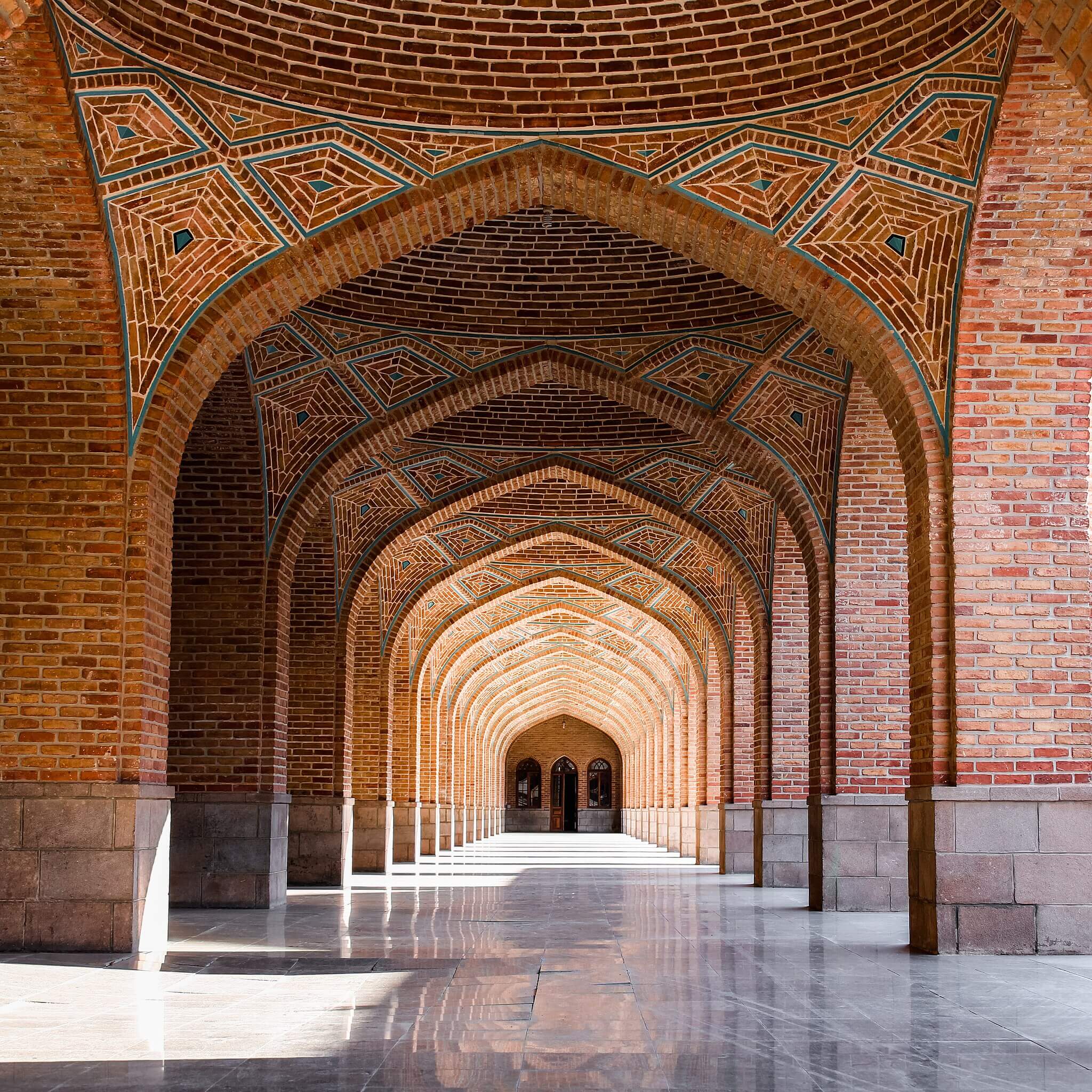
Blog image credit: Hameddaeipic, CC BY-SA 4.0 <https://creativecommons.org/licenses/by-sa/4.0>, via Wikimedia Commons